 Quran
Quran
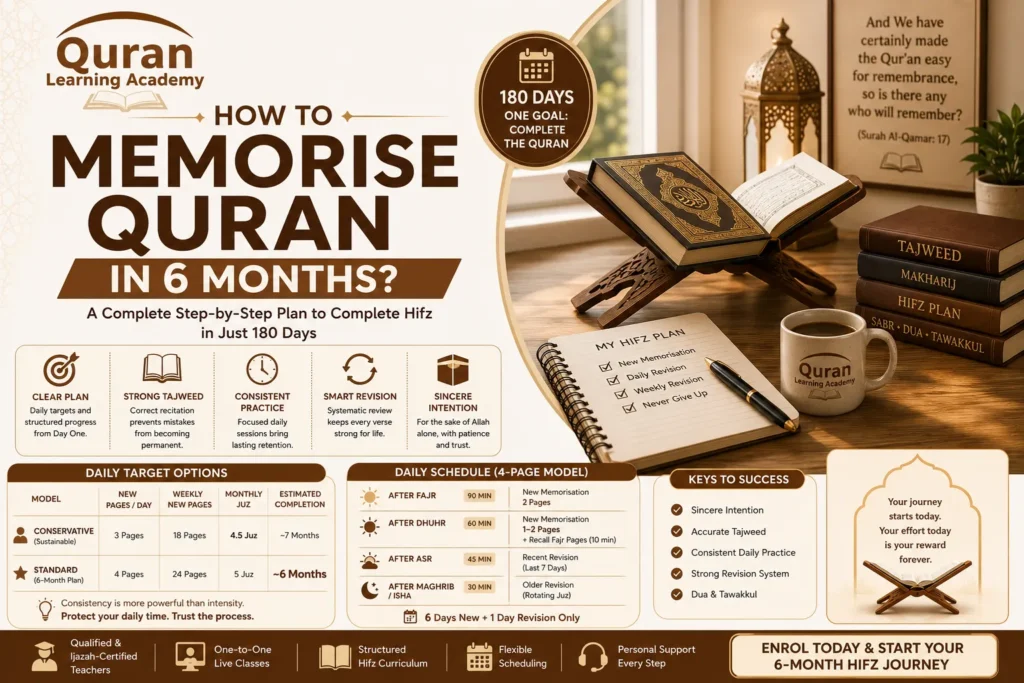
Six months, 604 pages, and 6,236 verses: if you are serious about completing Hifz, you need more than motivation—you need a plan. This guide explains how to memorize quran in 6 months in the UK, with a structured approach for learners who have strong Tajweed, daily availability, and the discipline to commit for 180 consecutive days.
It covers the daily memorisation targets, session structure, revision system, who this timeline suits, and month-by-month progression from Juz Amma to completion, so you can follow a practical plan without wasting weeks on a schedule that collapses under pressure.
1. Verify Your Tajweed Before Memorising a Single Verse
The most damaging mistake when learning how to memorise Quran in 6 months is starting before recitation is accurate. On an accelerated plan, errors compound quickly, and memorised mistakes can be three to four times harder to correct.
Repeating an incorrect verse reinforces the error until it becomes the memory itself. With 3–4 pages memorised daily, mistakes can become deeply embedded within weeks. Without a verified Tajweed foundation, learners may reach month three needing major corrections and lose crucial momentum.
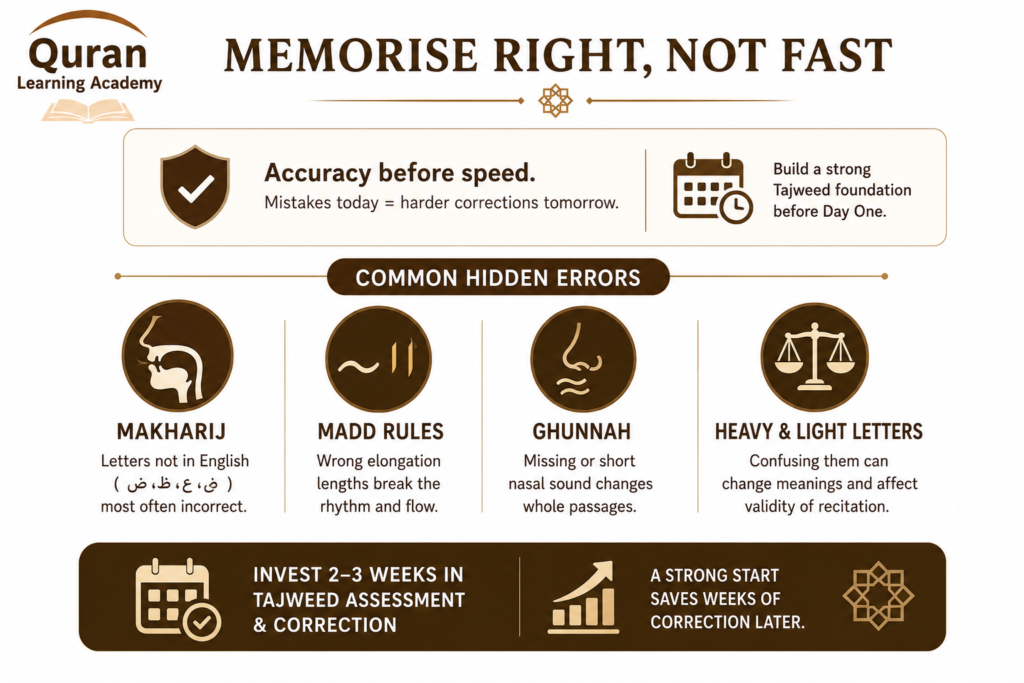
The Tajweed areas that most commonly carry undetected errors:
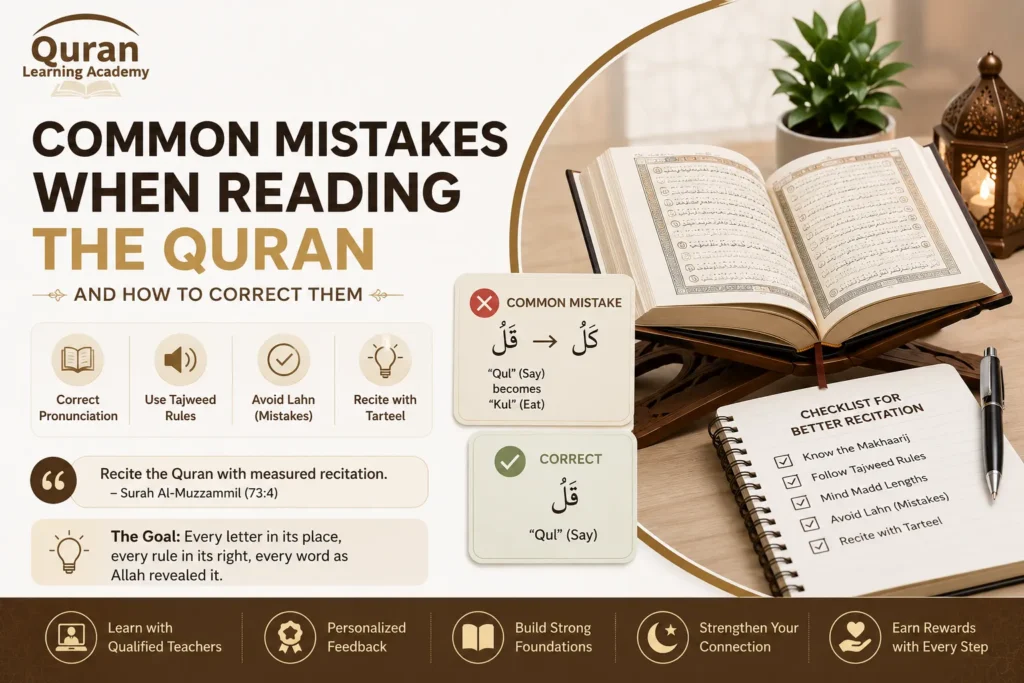
- Makharij: Articulation points for letters that do not exist in English — ض، ظ، ع، ح — are the most frequently incorrect.
- Madd rules: Incorrect elongation lengths disrupt the rhythm of recitation and alter how connected verses sound.
- Ghunnah: Missing or shortening the nasal sound on noon and meem changes the character of entire passages.
- Heavy and light letters: Confusing them changes meaning in specific verses — a category of error that affects the validity of recitation.
Before Day One of a 6-month Hifz plan, spend two to three weeks in a dedicated Tajweed assessment and correction programme. The time invested here saves weeks of correction later.
The Online Tajweed Classes in the UK at UK Quran Learning Academy provide structured, one-to-one Tajweed correction covering Makharij, Sifaat, and all major rules — taught by qualified instructors who identify specific errors in your recitation before they enter your memorisation.

Verify your Tajweed first at UK Quran Learning Academy
Read also: Is It Possible to Memorise the Whole Quran? And How?
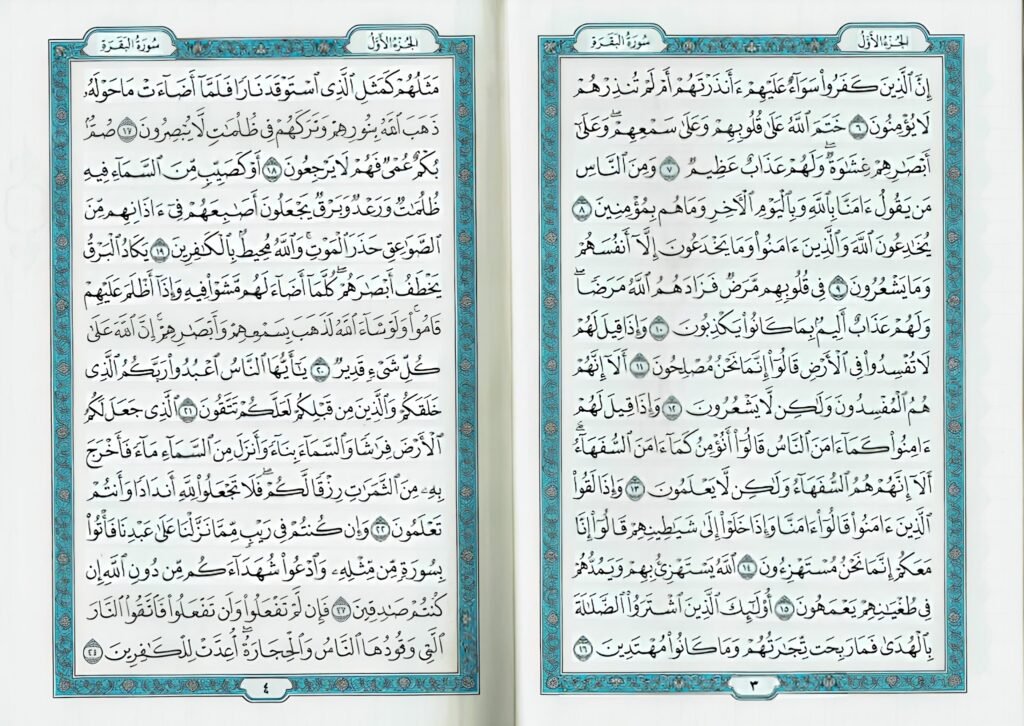
2. Fix the Madinah Mushaf as Your Only Copy from Day One
Visual memory is a significant component of Quranic memorisation that most learners underestimate — particularly on an accelerated timeline where the pace of new memorisation leaves no room for disruption.
The brain encodes the position of each verse on its specific page: which line it occupies, what appears above and below it, where the page ends. These visual anchors become retrieval cues that the memory returns to during recitation.
When the Mushaf is changed mid-Hifz — even to a different edition of the same Arabic text — the line breaks shift on nearly every page, the visual anchors no longer match the stored memory, and the learner is effectively forced to re-memorise material already held.
On a 6-month plan, this disruption at any stage is catastrophic. The Madinah Mushaf — 604 pages, 15 lines per page, 20 pages per Juz — is the globally standard choice for Hifz because of its uniform layout and widespread availability. Choose it before Day One. Keep it for the full 180 days. Use no other edition during the memorisation phase.
3. Set Your Daily Numbers Before the First Session Begins
How to memorise Quran in 6 months comes down to a clear mathematical target: 604 pages across 180 days. That requires approximately 3 to 4 pages of new memorisation daily across six days per week, with one day per week reserved for revision only.
The two standard daily targets for this timeline:
| Daily Model | New Pages Per Day | Weekly New Pages | Monthly Juz | Total Completion |
| Conservative (3 pages) | 3 pages | 18 pages | 4.5 Juz | ~7 months |
| Standard (4 pages) | 4 pages | 24 pages | 5 Juz | ~6 months |
The 4-page daily model is the benchmark for a true 6-month completion. It requires approximately 3.5 to 4 focused hours per day, split across multiple sessions rather than one unbroken block. Distributed practice consistently produces better long-term retention than marathon single sessions.
A realistic daily time distribution:
- After Fajr (90 minutes): New memorisation of 2 pages. The mind is rested, working memory is clear, and distraction is absent. This is the highest-value session of the day.
- After Dhuhr (60 minutes): New memorisation of remaining 1 to 2 pages. Begin with a 10-minute recall test of the Fajr pages before starting new material.
- After Asr (45 minutes): Recent revision — everything memorised in the past 7 days, recited without the Mushaf.
- After Maghrib or Isha (30 minutes): Older revision — rotating through Juz memorised more than 7 days ago.
Total focused daily time: approximately 3.5 to 4 hours. Never attempt to compress all four sessions into a single sitting — mental fatigue causes a sharp drop in encoding quality after 90 continuous minutes of active memorisation.
Read also: How to Memorise Quran in Old Age
Step Inside Our Virtual Classrooms
See how our interactive lessons work. Watch these brief highlights of our students engaging with instructors.
Start Your Quranic Journey in the UK
Join our academy for structured online lessons with expert tutors, tailored to fit your schedule.
Book Your Free Trial4. Build a Three-Tier Revision System That Runs Every Day Without Exception
How to hifz Quran in 6 months is impossible without an aggressive, non-negotiable revision system running in parallel with new memorisation from Day One. This is where most accelerated Hifz attempts collapse — learners focus entirely on progressing forward and treat revision as secondary. Memory does not work that way.
The Quran slips from memory faster than almost any other memorised text. The Prophetic tradition warns of this explicitly:
“صَاحِبِ الْقُرْآنِ كَمَثَلِ صَاحِبِ الإِبِلِ الْمُعَقَّلَةِ إِنْ عَاهَدَ عَلَيْهَا أَمْسَكَهَا وَإِنْ أَطْلَقَهَا ذَهَبَتْ”
“The example of the person who knows the Qur’an by heart is like the owner of tied camels. If he keeps them tied, he will control them, but if he releases them, they will run away.”
The three-tier revision system operates simultaneously:
Tier 1: Daily Recent Revision
Recite everything memorised in the past 7 days without the Mushaf. This is the active consolidation window — new memorisation is still fragile and requires daily reinforcement. This tier is non-negotiable even on difficult days.
Tier 2: Weekly Older Revision
Once per week, recite all material memorised more than 7 days ago. As the Juz accumulate, rotate through them — recite 2 Juz per rotation day, covering all memorised material within a rolling 2-week cycle.
Tier 3: Monthly Full Revision
At the end of each month, dedicate 3 to 4 days to reciting all memorised material from beginning to end as one connected sequence. This identifies weak transitions between Juz that daily revision cannot always catch.
On days when time is genuinely constrained, the Tier 1 daily recent revision is the one session that cannot be skipped. Protecting what is already memorised is always the priority over adding new material.
Read also: Motivation to Read Quran: 8 Powerful Reasons That Keep You Going
5. Follow the Month-by-Month Progress Map
The 6-month Hifz journey must be mapped before it begins. Without month-by-month targets, there is no early warning system when the pace falls behind — and on a 180-day plan, falling behind by two weeks in month two means arriving at month six with an impossible catch-up target.
The standard month-by-month breakdown for a 4-page daily model:
| Month | Target Juz | Pages to Memorise | Focus |
| Month 1 | Juz 30 to 26 | ~100 pages | Establish the method, build the revision habit |
| Month 2 | Juz 25 to 21 | ~100 pages | Increase pace, verify retention from month 1 |
| Month 3 | Juz 20 to 16 | ~100 pages | Mid-point assessment — revision load increasing |
| Month 4 | Juz 15 to 11 | ~100 pages | Longer Surahs — adjust daily targets per difficulty |
| Month 5 | Juz 10 to 1 | ~100 pages | Complete new memorisation, heavy revision begins |
| Month 6 | All 30 Juz | Consolidation only | No new memorisation — connect and perfect the whole |
Month 6 is the most critical and most misunderstood phase of how to memorise Quran in 6 months. No new verses are memorised during this month. The entire 30 days are devoted to reciting all 30 Juz in connected sequence, identifying every weak point, correcting every hesitation, and building the continuous fluency that transforms fragmented memorisation into complete Hifz.
By weeks 3 and 4 of month 6, the target is reciting 5 to 7 Juz in a single sitting from memory, building toward a complete Quran recitation from start to finish without interruption.
Read also: The Most Powerful Duas for Studying, Fast Memorisation, And Memory
6. Begin with Juz Amma and Progress Backward Through the Quran
The order of memorisation on a 6-month plan is deliberate. Starting with Juz Amma (30th Juz) and progressing backward toward Al-Baqarah suits accelerated Hifz because its shorter Surahs are often familiar from Salah.
This familiarity reduces initial repetitions and helps establish the method and revision system quickly. Early progress also builds the confidence needed to maintain momentum through the more demanding middle stages of an intensive Hifz plan.
As the plan progresses backward through the Juz, Surah length and complexity increase gradually. By the time the learner reaches Juz 1 to 5 — which includes Al-Baqarah, Al-Imran, and An-Nisa — the method, the revision system, and the daily discipline are fully established and able to handle the additional load.
For sisters pursuing this intensive goal in a structured, female-only environment, the Quran Hifz for Ladies in the UK at UK Quran Learning Academy provides one-to-one sessions with qualified female instructors, with a personalised progression plan and real-time Tajweed correction built into every session.

Join Quran Hifz for Ladies at UK Quran Learning Academy
7. Use the 10-3 Method for New Pages and Recite in Salah to Lock Them In
The memorisation method used inside each session determines whether the 4-page daily target holds or collapses within 48 hours. On a 6-month plan, there is no time to re-memorise material that was weakly encoded the first time.
The 10-3 method for each new verse:
- Read the verse 10 times from the Mushaf with full attention to every word.
- Close the Mushaf and recite the verse 3 times from memory without any pause or error.
- If any hesitation occurs during the 3 recitations, return to the Mushaf for 5 more readings and attempt again.
- Move to the next verse only when the current one flows 3 times consecutively without correction.
- After completing a full page, recite the entire page from beginning to end as one connected passage.
- At the end of the session, recite all pages memorised that day as one continuous block — no pauses between pages.
The most effective revision tool available costs no additional time: reciting the day’s new memorisation in voluntary prayers throughout the day.
Reciting new material in Sunnah prayers before Dhuhr, after Maghrib, and in Tahajjud forces active recall under prayer conditions — no Mushaf, no prompts — which strengthens the memory trace significantly faster than passive revision from the page.
The Prophet ﷺ said:
“ خَيْرُكُمْ مَنْ تَعَلَّمَ الْقُرْآنَ وَعَلَّمَهُ ”
“The best among you (Muslims) are those who learn the Qur’an and teach it.”
8. Work with a Qualified Teacher Every Day for Real-Time Correction
On a 6-month plan, self-study is not an option. The pace of memorisation is too fast for self-correction to be reliable, and errors that are allowed to stay for even a few days at this speed become embedded across dozens of repetitions before they are caught.
A qualified teacher on a 6-month plan serves three functions simultaneously:
- Real-time Tajweed correction before errors enter the memory — catching articulation mistakes, wrong Madd lengths, and missed Ghunnah at the point of first memorisation rather than weeks later.
- Accountability for the daily target — a teacher who knows your pace and plan applies the external pressure that keeps the 4-page daily target non-negotiable even when motivation dips.
- Identification of weak transitions — the specific points where one Surah or page connects to the next, which the learner cannot reliably self-assess during intensive forward progress.
Students who memorise on an accelerated timeline without a qualified teacher consistently produce memorisation with higher error rates, weaker verse-to-verse connections, and a higher likelihood of significant portions being lost within six months of completion. The oral chain of transmission that has preserved the Quran for fourteen centuries exists precisely because this level of accuracy cannot be achieved alone.
For adults — including those in full-time employment or with family commitments — the Hifz Classes for Adults in the UK at UK Quran Learning Academy provide structured one-to-one sessions with certified teachers, with flexible scheduling designed around realistic availability rather than a one-size-fits-all timetable.

Enrol in Hifz Classes for Adults at UK Quran Learning Academy
9. Protect Your Plan Against the Three Failure Points of the 6-Month Journey
How to memorise Quran in 6 months fails at predictable points for predictable reasons. Knowing them before they arrive allows the plan to survive them.
Month 2 plateau
The initial momentum of the first month fades. New material is no longer novel. Revision is accumulating. The daily 4-page target begins to feel heavy. This is the point where learners begin reducing their daily target or skipping revision sessions.
The solution is simple and must be applied immediately: on days when the pace feels unsustainable, skip new memorisation entirely and spend the full session on revision. Do not reduce the revision tier. The memorisation already held is more valuable than the next page.
Month 4 difficulty spike
Juz 10 to 1 contains the Quran’s longest and most complex Surahs — Al-Baqarah, Al-Imran, An-Nisa, Al-Ma’idah. The daily 4-page target is not always achievable across these Surahs at the same pace as Juz Amma.
Adjust the daily new memorisation target to 3 pages during these months, extend the timeline by two to three weeks if needed, but never reduce revision. A slightly extended completion at high retention quality is far more valuable than an on-schedule completion with weak retention.
Post-completion loss
The most common failure in 6-month Hifz is not during the memorisation phase — it is in the three months after completion. Learners who finish new memorisation and then reduce revision intensity lose significant portions within 90 days.
The 6-month mark is the end of new memorisation, not the end of the Hifz journey. The consolidation phase described in Month 6 must continue as a permanent daily revision practice from completion onward.
Is the 6-Month Timeline Right for You
Before Day One, this question must be answered honestly. How to memorise Quran in 6 months is achievable — but it is not suitable for every learner, and attempting it without the correct prerequisites produces weak memorisation that collapses within months of completion.
The 6-month Hifz plan suits learners who meet all of the following conditions:
| Prerequisite | What It Means in Practice |
| Fluent Quran reading | Any page of the Mushaf read without hesitation or decoding |
| Verified Tajweed | Makharij, Ghunnah, Madd, and Idghaam rules applied correctly |
| Prior memorisation experience | At least Juz Amma already memorised and held firmly |
| 3.5 to 4 daily hours available | Protected, distraction-free time — not squeezed between other demands |
| Access to a qualified teacher | Daily or at minimum three sessions per week for correction and accountability |
For complete beginners, the 6-month full Quran target is not realistic. A more appropriate 6-month goal for a beginner is completing Juz Amma plus 5 to 8 additional Juz — building the method, the habit, and the revision system correctly before attempting an accelerated full completion.
If all conditions above are met, the 6-month path is genuinely achievable. It has been completed by learners worldwide. The plan below is built around what that success actually requires.
Experience the Academy in Action
Curious about our teaching style? Take a quick look inside a live session to see our immersive, supportive learning environment first-hand.
Start Your Quranic Journey in the UK
Join our academy for structured online lessons with expert tutors, tailored to fit your schedule.
Book Your Free TrialStart Your 6-Month Hifz with UK Quran Learning Academy
An intensive Hifz plan without structured support and qualified daily correction is a plan built to stall. The architecture of the schedule is only as reliable as the accountability and expertise behind it.
UK Quran Learning Academy delivers fully structured Hifz programmes through live, one-to-one online sessions with certified teachers — personalised daily plans, real-time Tajweed correction from the first session, built-in revision tracking, and flexible scheduling that fits around real availability.
Every programme is designed to protect progress at the pace each learner can genuinely sustain.
Discover Our Quran Courses
- Quran Online Academy
- Quran Recitation Classes
- Quran Reading Classes
- Online Quran Classes for Kids
- Quran Classes for Adults
- Quran Classes for Female / Sisters
- Learn Quran Course for Beginners
- Quran Memorization (Hifz) Course
- Hifz Classes for Adults
- Quran Memorization and Hifz Course for Kids
- Quran Hifz Course for Ladies
- Quran Ijazah Program
- Quran Qirat Learning Course
- Quran Tafsir Course
- Noorani Qaida Course
- Noorani Qaida Course for Kids
- Weekend Quran Classes
- Intensive Quran Course
- Al-Azhar Quran Course
- Online Tajweed Classes
- Tajweed Course for Kids
- Tajweed Course for Adults
- Tajweed Course for Ladies

Book a Free Trial at UK Quran Learning Academy
Start Your Quranic Journey in the UK
Join our academy for structured online lessons with expert tutors, tailored to fit your schedule.
Book Your Free TrialConclusion
How to memorize quran in 6 months in the UK requires structure, preparation, and disciplined daily execution—not willpower alone. The 604 pages of the Madinah Mushaf mean 4 pages daily for 180 days, with verified Tajweed, a fixed Mushaf, a three-tier revision system from Day One, and qualified teacher correction.
The plan progresses from Juz 30 to 26 in month one, continuing backward through month five, followed by a sixth month dedicated entirely to consolidation. The timeline is demanding but achievable with strong retention, accurate Tajweed, and consistent practice.
Frequently Asked Questions
Is it realistic to memorise the whole Quran in 6 months?
Yes, for the right learner. It requires fluent Quran reading, verified Tajweed, prior memorisation experience, 3.5 to 4 daily hours of protected study time, and daily access to a qualified teacher. For complete beginners, a more realistic 6-month goal is Juz Amma plus several additional Juz, building the method and revision system first.
How many pages per day are needed to memorise Quran in 6 months?
Approximately 3 to 4 pages of new memorisation daily, six days per week, with one full day per week reserved for revision. At 4 pages daily, 24 pages are memorised per week — covering 5 Juz per month and completing the full 604 pages in approximately 6 months.
How many hours per day does the 6-month Hifz plan require?
A minimum of 3.5 to 4 focused hours per day, distributed across multiple sessions. This includes the primary Fajr memorisation session, a mid-day session for remaining new pages, an Asr session for recent revision, and an evening session for older material rotation.
Can I memorise Quran in 6 months while working full time?
This is extremely difficult on a full Quran target. The 3.5 to 4 daily hours required are very challenging to protect alongside full-time employment. A modified 6-month plan — targeting 10 to 15 Juz rather than the full Quran — is more realistic for working adults. The full 30-Juz completion is better suited to a 1 to 2 year timeline for those with significant work commitments.
What happens after completing memorisation in 6 months?
The sixth month is entirely devoted to consolidation — no new memorisation, only connecting and perfecting all 30 Juz. After completion, a permanent daily revision cycle is essential. Without it, significant portions are typically lost within 90 days. Reciting 5 Juz daily across a 6-day weekly cycle completes one full Quran review per week and protects long-term retention.






Leave a Reply