 Learn Arabic

| Key Takeaways |
| Seven focused days of structured Arabic study can establish a functional foundation in reading, speaking, and listening for UK learners. |
| Daily sessions of 45–60 minutes, built around a single skill each day, prevent overwhelm and accelerate early progress significantly. |
| Modern Standard Arabic and spoken Arabic dialects serve different purposes — knowing which to prioritise on Day 1 changes everything for a UK learner. |
| Adult beginners in the UK learn Arabic fastest when pronunciation, script, and basic conversation are introduced in a specific, deliberate sequence. |
| Seven days will not make you fluent — but they can establish the habits, structures, and vocabulary base that make fluency achievable over months. |
Learning Arabic in 7 days in the UK is a goal that requires honesty and a plan in equal measure. Most people who type this into a search engine are not expecting to reach fluency — they want to know whether a week of focused effort can give them something real. It can. What you build in seven days determines whether your Arabic study continues or stalls.
Seven days of structured, deliberate practice can give you the Arabic alphabet, basic pronunciation, 100–150 core words, and enough conversational building blocks to introduce yourself, ask simple questions, and begin listening to Arabic with growing recognition.
Day 1: Learning the Arabic Alphabet Is Your Non-Negotiable Starting Point
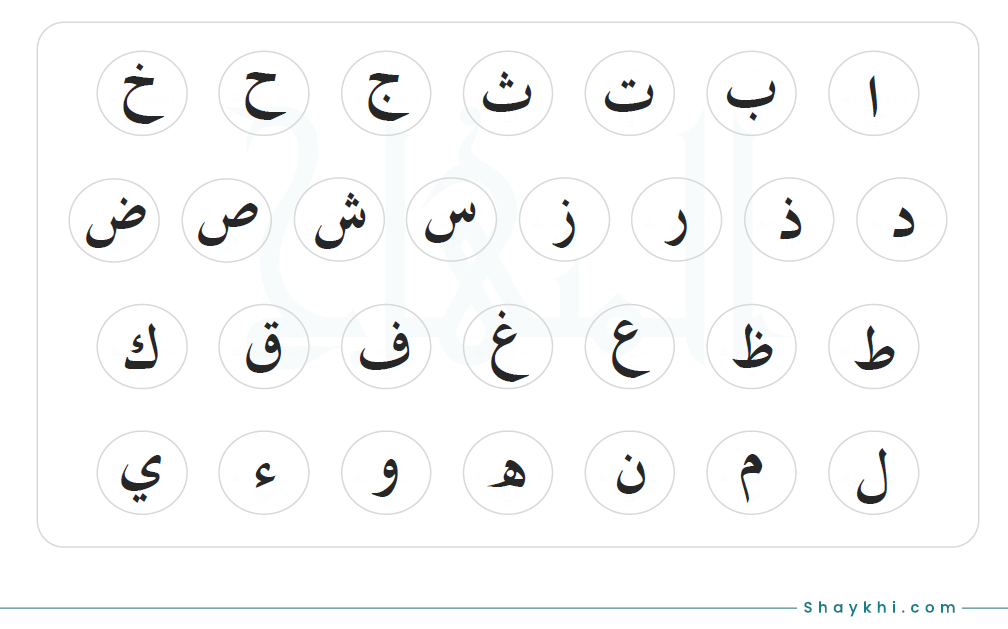
The Arabic alphabet has 28 letters, and every one of them must be known before anything else makes sense. On Day 1, your sole task is to move from zero to a working recognition of all 28 letters — not mastery, but recognition.
Spend 20 minutes on the first 14 letters in the morning, 20 minutes on the second 14 in the evening, and use a spaced-repetition app like Anki in between.
What most beginners in the UK underestimate is that Arabic letters change shape depending on their position in a word — initial, medial, final, and isolated forms.
A letter like ع (ʿayn) looks different depending on where it sits. You do not need to memorise all four forms on Day 1, but knowing this exists prevents confusion later.
Focus on writing each letter by hand — not just recognising it on a screen. The physical act of writing Arabic from right to left builds a neural pathway that passive recognition alone does not create.
British learners who skip handwriting practice on Day 1 almost always report slower reading speed in their first weeks.
Day 2: Arabic Pronunciation Requires Training Your Mouth Before Training Your Memory
Arabic has sounds that simply do not exist in English, and Day 2 is entirely about training your vocal tract to produce them accurately. The sounds to focus on first are ع (a voiced pharyngeal fricative), خ (kh, as in the Scottish “loch”), غ (gh, a voiced uvular sound), ح (a breathy h from deep in the throat), and ق (q, a uvular stop made at the back of the mouth).
In our experience working with adult learners across the UK, the single most common error is substituting a plain English vowel for ع — saying “ayn” as if it were just the letter ‘a’.
The difference is audible immediately to any native speaker. Spending 30 minutes on correct mouth positioning for these sounds on Day 2 saves months of retraining later.
Arabic vowels are equally important. Short vowels (fathah, kasrah, dammah) and long vowels each affect meaning — the same consonant root with different vowel patterns produces entirely different words.
Use YouTube resources from established Arabic language channels to hear native pronunciation, then record yourself and compare. This self-monitoring habit, built on Day 2, will serve you for the entire week and beyond.
For those ready to move from self-study into structured progression, our intensive Arabic course at The UK Quran Learning Academy is designed for exactly this transition — consolidating a beginner’s foundation and building toward real fluency through one-to-one online sessions.
Book a FREE trial class in our intensive Arabic Course in the UK
Day 3: Building Your First 100 Arabic Words Gives You the Scaffolding for Everything Else
Vocabulary is the architecture of a language. On Day 3, target 100 high-frequency Arabic words — not random vocabulary, but the words that appear most often in everyday speech. Prioritise pronouns (أنا, أنت, هو, هي), numbers 1–10, common nouns (house, water, food, name, day, time, family), essential verbs (to go, to eat, to speak, to know, to want), and key question words (what, where, when, who, how).
Arabic vocabulary learning is made more efficient when you understand that the language operates on a root system. Most Arabic words derive from a three-letter root that carries a core meaning.
The root ك-ت-ب (k-t-b), for example, relates to writing — كَتَبَ (he wrote), كِتَاب (book), كَاتِب (writer). Recognising this pattern from Day 3 means you learn families of words rather than isolated terms.
Use spaced repetition to review Day 1 and Day 2 content for 15 minutes before beginning new vocabulary.
The forgetting curve is steepest in the first 48 hours — a short review session on the morning of Day 3 significantly improves long-term retention of the alphabet and pronunciation foundations you built earlier.
Shots Videos from Our Courses
Start Your Quranic Journey in the UK
Join our academy for structured online lessons with expert tutors, tailored to fit your schedule.
Book Your Free TrialDay 4: Study Arabic Grammar Fundamentals
Arabic grammar has a reputation that stops learners before they begin. The reality is that the core structures governing basic conversation are learnable in a single focused day. On Day 4, concentrate on four fundamentals: sentence structure, gender agreement, the definite article, and simple verb conjugation in the present tense.
Arabic sentence structure in everyday speech often follows a subject-verb-object pattern, though verb-initial sentences are common in formal Arabic.
More immediately useful: Arabic nouns are either masculine or feminine, and adjectives must match. “A big book” is كِتَابٌ كَبِير (kitaabun kabiir — both masculine). “A big city” is مَدِينَةٌ كَبِيرَة (madinatun kabiira — both feminine).
This agreement principle is the single most consistent rule in basic Arabic grammar, and understanding it on Day 4 prevents the most frequent errors in Days 5–7.
The definite article in Arabic — الـ (al-) — is far simpler than its English equivalent. It never changes for gender or number, though it does assimilate to certain following letters (the sun letters, حروف شمسية), changing pronunciation without changing spelling.
Knowing this on Day 4 prevents confusion when you begin reading and speaking in Days 5 and 6.
If you want structured grammar instruction that goes beyond what seven days can accomplish, our Arabic grammar course at The UK Quran Learning Academy provides systematic, step-by-step grammar teaching for UK adult learners — with one-to-one instruction that corrects exactly the patterns most British learners find difficult.
Book a FREE trial class in our Arabic grammar Course in the UK
Day 5: Conversational Practice Is Where Arabic Moves From Knowledge to Skill
Speaking Arabic — however imperfectly — is what separates learners who progress from those who plateau. On Day 5, your task is to construct and speak 20 short sentences aloud using everything you have built over the previous four days. Introductions, simple questions, and present-tense descriptions are your building blocks.
Practise sentences like: أنا من بريطانيا (Ana min Britania — I am from Britain), ما اسمك؟ (Ma ismuk? — What is your name?), أين تسكن؟ (Ayna taskun? — Where do you live?), and أريد أن أتعلم العربية (Uriidu an ata’allam al-‘arabiyya — I want to learn Arabic).
These are not just textbook phrases — they are functional sentences a UK learner can use in a real conversation with an Arabic speaker within the week.
The gap between reading Arabic and speaking it is wider than most learners anticipate. Speaking forces you to retrieve vocabulary under pressure, maintain grammar rules in real time, and produce sounds correctly without the luxury of pausing over a page.
Even 20 minutes of speaking practice on Day 5 — recording yourself on your phone and playing it back — will reveal gaps in your knowledge more efficiently than an hour of reading.
For learners who want to continue developing spoken fluency beyond this week, our Arabic conversation and speaking course is structured specifically around building confident spoken Arabic for British learners from the ground up.
Book a FREE trial class in our Speaking Arabic Course in the UK

Day 6: Arabic Listening Comprehension Must Be Trained Separately From Speaking
Listening to Arabic is a distinct skill from speaking it, and Day 6 is where you begin developing your ear. Start with slow, clear spoken Arabic — language learning podcasts such as ArabicPod101 (beginner episodes), or simplified Arabic news from BBC Arabic’s learning content. Do not start with native-speed television or music — the speed will discourage rather than train.
The listening-recognition gap is something we observe consistently with UK learners at the intermediate stage: students who have learned vocabulary through reading often fail to recognise the same words at natural speaking speed.
Training your ear from Day 6 — even at beginner level — prevents this gap from forming and builds the neural association between written Arabic and its spoken form.
Spend 30 minutes listening and 15 minutes on transcription practice: listen to a short clip (30–45 seconds), pause, and write down what you heard. Compare with the transcript if available.
This active listening method accelerates comprehension development faster than passive background listening. It also reinforces your spelling and letter recognition from Days 1 and 2.
Day 7: Consolidation and Conversation Simulation Converts Seven Days Into a Foundation
Day 7 is not a rest day and not a day for new material. It is the day you convert seven days of individual skills into a coherent, functional base. Spend the day in three phases: a 20-minute review of all 28 letters and pronunciation sounds, a 20-minute vocabulary consolidation session using your spaced-repetition cards, and a 30-minute simulated conversation — either with a language partner, a tutor, or by recording yourself working through a structured dialogue.
By Day 7, a committed learner will be able to read simple Arabic text letter by letter (slowly), produce 100+ words from memory, form simple present-tense sentences correctly, and begin to recognise isolated words in spoken Arabic at a moderate pace.
These are real, measurable outcomes — not promises. They represent what our instructors observe in adult beginners who apply structured, disciplined effort over a concentrated period.
The question after Day 7 is not whether you have learned Arabic — it is whether you continue. The learners who sustain progress are those who build Day 8 through Day 30 on the same discipline.
Book your free trial lesson at The UK Quran Learning Academy’s Arabic course page and continue where your seven days leave off.
Book a FREE trial class in our Arabic Course in the UK

Read Also: How to Learn Arabic on Your Own in the UK?
Your 7-Day Arabic Learning Schedule at a Glance
| Day | Focus Area | Primary Activity | Time Required |
| Day 1 | The Alphabet | Learn all 28 letters, write by hand, begin spaced repetition | 60 minutes |
| Day 2 | Pronunciation | Practise pharyngeal and uvular sounds, record and review | 45 minutes |
| Day 3 | Vocabulary | Build 100-word base using root system and spaced repetition | 60 minutes |
| Day 4 | Grammar | Sentence structure, gender agreement, definite article, present tense | 60 minutes |
| Day 5 | Speaking | Construct and speak 20 sentences aloud, record yourself | 50 minutes |
| Day 6 | Listening | Slow Arabic content + 15 minutes transcription practice | 45 minutes |
| Day 7 | Consolidation | Review all areas + simulated conversation or dialogue | 70 minutes |
Common Errors British Learners Make in the First Week
| Error | Why It Happens | Correction |
| Skipping letter forms (initial/medial/final) | Learners focus on isolated forms only | Study all four positions from Day 1 |
| Pronouncing ع as a plain vowel | No equivalent sound in English | Practise the voiced pharyngeal fricative with audio |
| Learning vocabulary without grammar context | Vocabulary-first apps encourage this | Pair new words with sentence frames from Day 4 |
| Passive listening without transcription | Feels easier; produces less learning | Pause, transcribe, compare — active listening always |
| Skipping handwriting for digital-only learning | Apps make this easy to avoid | Write Arabic by hand daily, even 10 letters per session |
| Treating Day 7 as a finish line | The framing of “7 days” implies completion | Plan Day 8 before Day 7 ends — sustainability is the goal |
Our Students Reviews
Start Your Quranic Journey in the UK
Join our academy for structured online lessons with expert tutors, tailored to fit your schedule.
Book Your Free TrialRead Also: How to Learn Arabic in 3 Months in the UK?
Start Structured Arabic Learning With The UK Quran Learning Academy
Seven focused days establish a foundation — qualified instruction is what builds on it. The UK Quran Learning Academy provides one-to-one online Arabic courses for UK learners at every level, with flexible scheduling designed for British adults, parents, and students.
- Qualified, experienced instructors who teach British learners
- One-to-one personalised sessions — no group class format
- Flexible scheduling built around UK life and work patterns
- Courses covering Arabic reading, writing, speaking, listening, and grammar
- Programmes available for children and adults, including absolute beginners
- Free trial lesson with no commitment required
Check out our top Arabic courses for UK students:
- Intensive Arabic course
- Arabic grammar course
- Arabic conversation and speaking course
- Arabic language course
Book your FREE trial session today

Conclusion
Seven days of Arabic study works when each day has a clear, singular focus. The alphabet, pronunciation, vocabulary, grammar, speaking, listening, and consolidation — in that sequence — build on each other rather than competing for the same attention.
The biggest obstacle British learners face is not the language itself — it is the absence of a system. Arabic has a logical structure that rewards structured study. The root system, the consistent grammar rules, and the phonetic spelling mean that everything you learn connects to everything else. A week of disciplined work builds more than seven days of knowledge — it builds the pattern of learning that makes the next month achievable.
Frequently Asked Questions About Learning Arabic in 7 Days in the UK
Can you realistically learn Arabic in just 7 days?
You can establish a genuine, functional foundation in seven days — the full alphabet, 100+ core vocabulary words, basic grammar structures, and early speaking and listening skills. Fluency takes months of consistent practice. Seven days of structured effort, however, is enough to move from zero to a point where continued learning accelerates rather than starts from scratch.
What type of Arabic should a UK beginner focus on in their first week?
For most UK learners, Modern Standard Arabic (MSA) provides the best foundation for the first week. MSA is understood across the Arab world, forms the basis of written Arabic, and underpins all major dialects. It is the version taught in structured courses and used in formal media. Dialect learning is more valuable once a solid MSA base exists.
How many hours per day do you need to study Arabic in the 7-day plan?
Each day in this plan requires 45–70 minutes of focused, active study. That includes new learning, review of previous days’ material, and daily speaking or writing practice. Passive exposure — listening to Arabic in the background — is supplementary, not a substitute for structured sessions.
Is it too late to start learning Arabic as an adult in the UK?
Adult learners in the UK often ask this, and the answer is straightforwardly no. Adults bring advantages children do not have: stronger metacognitive awareness, existing literacy in English, and the ability to understand grammatical patterns analytically. The challenge is consistency, not capacity. Structured one-to-one instruction is often more effective for adults than classroom-based learning.







Leave a Reply